

What is Customs Clearance?
Customs Clearance is the legal process through which goods are allowed to enter or leave a country after verification by Customs authorities that all laws, duties, documents, and compliances are fulfilled.
In simple words:
Customs Clearance = Government permission to import or export goods.
Customs Check document–HS code–value–policy
Customs ensures four core objectives:
- 1. Correct declaration
2 Correct duty/tax payment
3 Policy & regulatory compliance
4 Trade security & risk control
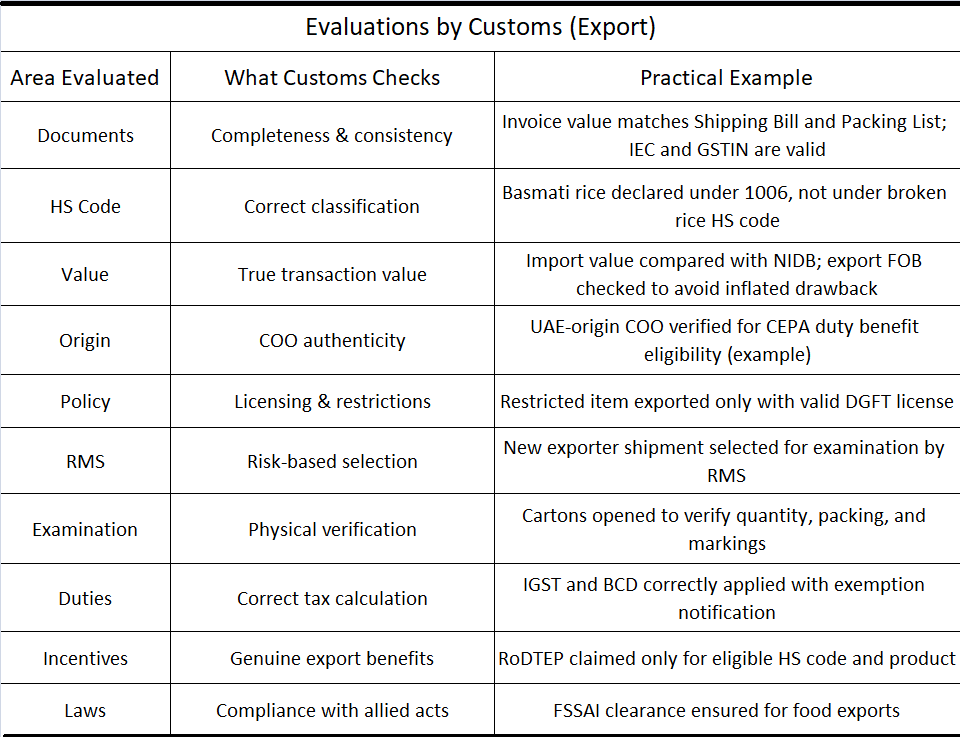
Customs Clearance – Step-by-Step (India)
For Exports
- Shipping Bill filed on ICEGATE
- Documents verified
- RMS assessment
- Examination (if selected)
- Compliance certificates verified
- LEO – Let Export Order granted
Only after LEO the goods can be exported.
For Imports
-
Bill of Entry filed
-
Assessment of classification & value
-
Duty calculation
-
RMS / examination (if selected)
-
Duty payment
-
Out of Charge (OOC) given
Only after OOC can goods be taken delivery.
Who Performs Customs Clearance?
- Customs Officers (Government)
- Customs Broker (CHA) on behalf of importer/exporter
- Self-filing exporters/importers (where permitted)
Why Customs Clearance is Important?
- Prevents smuggling & fraud
- Ensures government revenue
- Protects consumers & environment
- Maintains international trade trust
Important:
Without Customs Clearance your products can not be exported or imported.
Customs Clearance = Government permission to import or export goods.