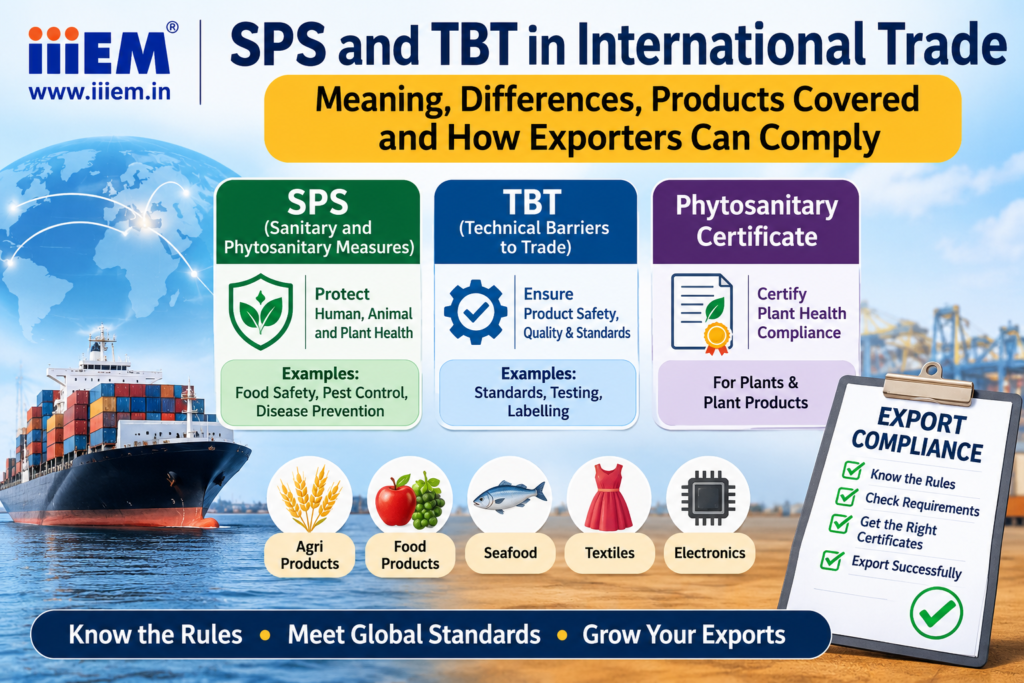
SPS and TBT in International Trade: Meaning, Differences, Products Covered and How Exporters Can Comply
When exporting goods to another country, meeting the buyer’s requirements is not enough. Every country has certain rules and regulations to ensure that imported products are safe, meet quality standards and do not harm human, animal or plant health.
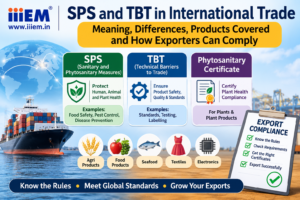
Two important international trade terms exporters must understand are SPS (Sanitary and Phytosanitary Measures) and TBT (Technical Barriers to Trade).
These requirements are particularly important for exporters dealing in agricultural products, food, seafood, chemicals, textiles, electronics and manufactured goods. But what exactly are SPS and TBT? Are they the same as a Phytosanitary Certificate? Let’s understand.
1. What is SPS in International Trade?
SPS stands for Sanitary and Phytosanitary Measures. These are regulations imposed by importing countries to protect human, animal and plant health.
SPS measures ensure that imported products do not carry harmful bacteria, diseases, pests, contaminants or other health risks.
Examples of SPS requirements:
- Limits on pesticide residues in fruits and vegetables.
- Food safety and microbiological testing.
- Animal health and disease-free certification.
- Plant quarantine and pest inspection.
- Restrictions on harmful food additives.
- Fumigation and other quarantine treatments.
Industries and products covered under SPS:
- Agriculture: Rice, wheat, fruits, vegetables, spices and pulses.
- Food Processing: Packaged food, processed fruits, juices and dairy products.
- Fisheries: Fish, seafood and marine products.
- Animal Products: Meat, poultry, eggs, milk and dairy products.
- Floriculture: Flowers, seeds, plants and nursery products.
2. What is TBT in International Trade?
TBT stands for Technical Barriers to Trade. It refers to technical regulations, product standards, testing and certification requirements imposed by importing countries.
The objective is to ensure that imported products meet the required safety, quality, performance, labelling and packaging standards.
Examples of TBT requirements:
- Product quality and performance standards.
- Labelling and packaging regulations.
- Electrical safety testing.
- Energy efficiency standards.
- Chemical composition and product specifications.
- Product testing and conformity assessment.
- Safety certifications for toys and machinery.
Industries and products covered under TBT:
- Electronics: Mobile phones, chargers, electrical appliances and components.
- Textiles: Garments, fabrics and footwear.
- Engineering: Machinery, automobile parts and industrial equipment.
- Chemicals: Paints, fertilizers and industrial chemicals.
- Consumer Goods: Toys, furniture, household products and cosmetics.
- Packaging: Containers, bottles and packaging materials.
3. Is SPS the Same as a Phytosanitary Certificate?
No. SPS and Phytosanitary Certificates are not the same.
SPS is a broad set of international trade regulations covering food safety, animal health and plant health. A Phytosanitary Certificate (PSC) is an official document issued by the authorised plant protection authority of the exporting country.
It certifies that the applicable plant health requirements have been met for the export consignment.
For example, when exporting fresh mangoes, grapes, rice or seeds, the importing country may require a Phytosanitary Certificate to confirm compliance with its plant quarantine requirements.
In India, Phytosanitary Certificates are issued through the Directorate of Plant Protection, Quarantine and Storage (DPPQ&S) under the Ministry of Agriculture and Farmers Welfare. Exporters can apply through the Plant Quarantine Management System (PQMS).
Remember: A Phytosanitary Certificate is relevant to plant health requirements under SPS. It is not a general certificate for all food or agricultural products.
4. Difference Between SPS, TBT and Phytosanitary Certificate
| Particulars | SPS | TBT | Phytosanitary Certificate |
|---|---|---|---|
| Full Form | Sanitary and Phytosanitary Measures | Technical Barriers to Trade | Phytosanitary Certificate |
| Purpose | Protect human, animal and plant health | Ensure technical standards and product compliance | Certify compliance with applicable plant health requirements |
| Coverage | Food safety, animal and plant health | Product safety, quality, labelling and performance | Plants and regulated plant products |
| Examples | Pesticide residue limits, pest control | Electrical safety, labelling standards | Export of fresh fruits, seeds and plants |
| Nature | Regulatory requirements | Technical regulations and standards | Official certification document |
5. How Can Exporters Check and Comply with SPS and TBT Requirements?
Before exporting, every exporter should identify the requirements of the destination country. Follow these steps:
1. Identify the Product and HS Code
Determine the correct HS Code and product description. Requirements may differ depending on the product, processing method and intended use.
2. Check the Importing Country’s Regulations
Ask your overseas buyer for the applicable import conditions. Also check the destination country’s official food safety, plant quarantine and product regulatory authorities.
3. Check SPS and TBT Notifications
Visit the WTO’s ePing SPS & TBT Platform to search for notifications issued by importing countries. These notifications help exporters identify changes in product regulations and technical requirements.
4. Arrange Testing and Certification
Depending on the product, arrange laboratory testing, quality inspection, health certificates, Phytosanitary Certificates or technical conformity certificates from the appropriate authorised agencies.
5. Verify Labelling and Packaging
Check the destination country’s requirements for product labels, language, ingredients, nutritional information, safety warnings, packaging and marking.
6. Keep Documents Ready
Maintain relevant test reports, certificates, product specifications, declarations and other supporting documents required by the importing country.
Conclusion
SPS and TBT are important compliance requirements in international trade. While SPS focuses on food safety and human, animal and plant health, TBT focuses on technical regulations, product standards, safety, quality and labelling.
A Phytosanitary Certificate is one specific document used to meet applicable plant health requirements under SPS.
For new exporters, understanding these regulations before accepting an export order is essential. Always verify the importing country’s requirements before manufacturing, packing and shipping goods. Proper compliance helps avoid shipment delays, rejection, penalties and unnecessary costs.
Export successfully by understanding the regulations before entering the global market!
Frequently Asked Questions (FAQs)
1. What is the full form of SPS in export and import?
SPS stands for Sanitary and Phytosanitary Measures. These regulations protect human, animal and plant health against risks such as pests, diseases and harmful food contaminants.
2. What is the full form of TBT in international trade?
TBT stands for Technical Barriers to Trade. It covers technical regulations, product standards, testing, certification, packaging and labelling requirements.
3. Is a Phytosanitary Certificate mandatory for all agricultural exports?
No. It depends on the product and the importing country’s regulations. Many plants and plant products require this certificate, while certain processed products may be exempt.
4. Which industries require SPS compliance?
Agriculture, food processing, fisheries, meat, poultry, dairy, floriculture and other industries dealing with food safety, animal health and plant health may be subject to SPS requirements.
5. How can Indian exporters check SPS and TBT requirements?
Indian exporters can check WTO’s ePing SPS & TBT Platform, the importing country’s official regulatory websites and India’s relevant export authorities such as APEDA and DPPQ&S.