India’s Trade Boundaries: What India Does Not Buy or Sell to the World – And Why?
India’s Trade Policy
India is one of the world’s major trading nations, exporting products ranging from medicines, textiles and engineering goods to agricultural products, automobiles and technology. Similarly, India imports crude oil, electronics, machinery, gold, chemicals and several other essential products.
But have you ever wondered what India does not export or import?
Not every product can be freely bought or sold across India’s international borders. Some goods are completely prohibited, some are restricted and require special government permission, while others are controlled for reasons related to national security, public health, environmental protection and domestic industry.
For new exporters and importers, understanding these trade restrictions is important before selecting a product or entering an international market.
1. What Does India Not Export? Why Are Certain Products Banned?
India does not allow the export of certain products because of national security, environmental protection, public interest or the need to maintain sufficient domestic supplies.
Some examples include:
-
Endangered wildlife and animal products: Products such as ivory, certain animal skins and other protected wildlife articles are prohibited to prevent illegal wildlife trade and protect endangered species.
-
Certain narcotic and psychotropic substances: Their movement across international borders is prohibited or strictly controlled under applicable laws.
-
Certain protected plants and forest products: Exports may be prohibited or restricted to protect biodiversity and natural resources.
-
Certain essential commodities: The government may restrict or temporarily prohibit exports of products such as wheat, rice, sugar or other food items to maintain domestic availability and control prices.
-
Certain defence and sensitive technology products: Military equipment, dual-use goods and sensitive technologies may require special export authorisation under India’s SCOMET regulations.
Why does India restrict exports?
The major reasons are:
-
To ensure food security and prevent shortages.
-
To protect wildlife, forests and natural resources.
-
To safeguard national security.
-
To prevent illegal international trade.
-
To protect public health and national interests.
2. What Does India Not Import? Why Are Certain Products Banned?
India also prohibits the import of certain goods to protect its citizens, environment, domestic industries and national security.
Some examples include:
-
Narcotic drugs and prohibited psychotropic substances: Certain substances cannot be imported because of their potential misuse and health risks.
-
Counterfeit and pirated products: Fake branded goods and products violating intellectual property rights are prohibited.
-
Protected wildlife products: Certain endangered animals, plants and products derived from them cannot be freely imported under wildlife protection and international conservation rules.
-
Certain hazardous and waste materials: Imports of prohibited hazardous waste and other environmentally harmful materials are restricted or banned under applicable environmental regulations.
-
Certain arms, ammunition and sensitive equipment: These products require specific government permissions and cannot be freely imported.
Why does India restrict imports?
The major reasons are:
-
To protect Indian manufacturers and domestic industries.
-
To prevent health and environmental risks.
-
To safeguard national security.
-
To stop illegal and counterfeit products.
-
To reduce dependence on certain foreign products where domestic interests require protection.
3. Are All Restricted Products Completely Banned?
No. This is an important point for every new exporter and importer.
Under India’s Foreign Trade Policy, products generally fall into four categories:
| Category | Meaning |
|---|---|
|
Free |
Can be imported or exported, subject to applicable conditions and regulations. |
|
Restricted |
Requires an authorisation or permission from the concerned authority. |
| Prohibited |
Cannot normally be imported or exported. |
|
State Trading Enterprise (STE) |
Trade is permitted only through designated government agencies or enterprises. |
For example, a restricted product may be imported after obtaining the required DGFT authorisation. A prohibited product, however, cannot normally be traded.
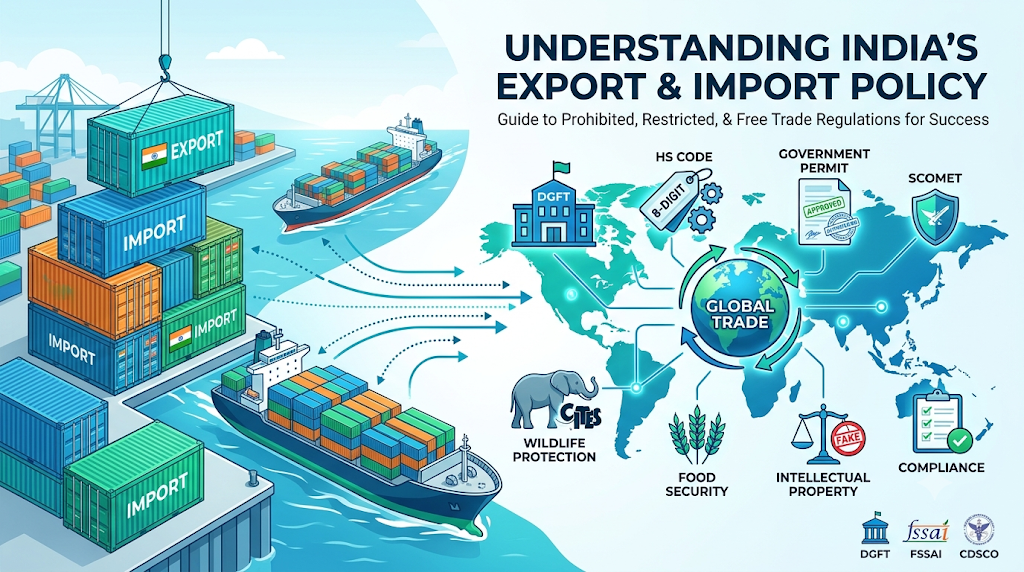
The product’s ITC (HS) code determines its applicable import or export policy.
4. How Can New Exporters and Importers Check Whether a Product Is Allowed?
Before selecting a product for your export-import business, follow these steps:
-
Identify the correct HS Code: Find the correct 8-digit ITC (HS) code for your product.
-
Check DGFT regulations: Visit the Directorate General of Foreign Trade (DGFT) website and check whether the product is Free, Restricted or Prohibited.
-
Check additional regulations: Verify whether your product requires approval from authorities such as FSSAI, Plant Quarantine, Animal Quarantine, CDSCO or other relevant departments.
-
Check destination-country rules: If you are exporting, remember that a product permitted in India may still be prohibited or restricted in the importing country.
-
Check the latest notifications: Import and export policies can change depending on market conditions and government decisions.
Useful official websites:
5. Conclusion
India does not trade every product freely with the world. Certain goods are prohibited, while others require special permissions or are traded through designated government agencies.
For new exporters and importers, understanding India’s prohibited and restricted import-export products is an important part of selecting the right business opportunity.
Remember: A good export-import business does not begin with finding a buyer or supplier. It begins with understanding whether your chosen product can legally enter or leave the country.
Do your research, verify the HS Code, check government regulations and make informed business decisions before investing your money.
Frequently Asked Questions (FAQs)
1. Which products are prohibited for export from India?
Certain protected wildlife products, specified narcotic substances and other goods notified under India’s export policy are prohibited. Some essential commodities may also face temporary export restrictions.
2. Which products are prohibited for import into India?
Certain narcotic substances, counterfeit and pirated goods, protected wildlife products and other notified goods are prohibited from import into India.
3. What is the difference between restricted and prohibited goods?
Restricted goods can be imported or exported after obtaining the required authorisation or permission. Prohibited goods cannot normally be traded across India’s borders.
4. Where can I check India’s latest import and export restrictions?
You can check the latest ITC (HS) Import and Export Policy, notifications and authorisation requirements on the official DGFT website at www.dgft.gov.in.
5. Can a new exporter or importer trade in restricted products?
Yes, provided the business obtains the required authorisations, licences and regulatory approvals and fulfils all applicable conditions.