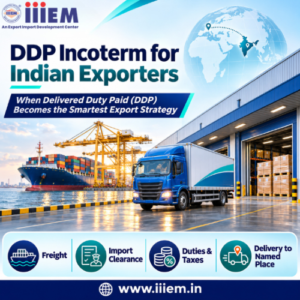
Choosing the right Incoterm can significantly influence the success of an international trade transaction. Among all Incoterms 2020, Delivered Duty Paid (DDP) is considered one of the most service-intensive shipping terms because the exporter assumes maximum responsibility for the shipment until it reaches the buyer’s specified destination.
For Indian exporters looking to strengthen customer relationships, expand into new international markets, or differentiate themselves from competitors, the DDP Incoterm can be an effective solution. However, it is not always the right choice. Understanding when Delivered Duty Paid (DDP) works best can help exporters improve customer satisfaction, control supply chain performance, and increase global sales.
What Is DDP Incoterm?
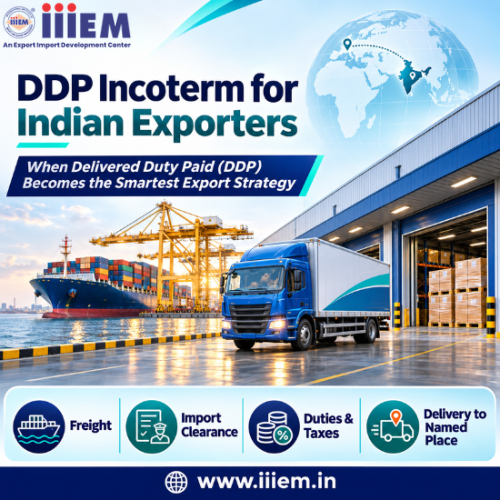
DDP (Delivered Duty Paid) is an international trade term under Incoterms 2020 where the seller assumes responsibility for transporting goods from the origin in India to the buyer’s final destination, including:
- Export customs clearance in India
- Freight transportation
- Insurance (if agreed)
- Import customs clearance
- Import duties and taxes
- Last-mile delivery
Under DDP, the buyer receives goods with minimal logistical involvement, making it one of the most customer-friendly international shipping arrangements.
When Is DDP Better for Indian Exporters?
- When Exporting Machinery and Industrial Equipment
DDP is frequently used for machinery exports from India, particularly when buyers expect the supplier to manage the entire logistics chain.
Examples include:
- Industrial machinery
- Manufacturing equipment
- Packaging machinery
- Construction equipment
- Engineering products
Since these products often involve high values and specialised transportation requirements, buyers prefer suppliers who can ensure smooth delivery to the final installation site.
- When Shipping Heavy or Bulky Cargo
Heavy and oversized cargo frequently requires complex logistics coordination.
DDP can be advantageous for shipments such as:
- Plant and machinery
- Industrial components
- Engineering structures
- Project cargo
- Heavy manufacturing equipment
For such exports, the seller often has greater expertise in handling freight planning, route selection, customs documentation, and delivery arrangements than the overseas buyer.
Managing the movement under a Delivered Duty Paid arrangement allows the exporter to maintain end-to-end control over the supply chain.
- When Selling to New International Buyers
Many overseas buyers, especially small and medium-sized enterprises, prefer a hassle-free purchasing experience. Offering DDP shipping from India removes uncertainty regarding customs procedures, freight management, and import duties.
This helps Indian exporters:
- Build trust faster
- Reduce buying barriers
- Improve customer experience
- Increase conversion rates
For first-time export transactions, DDP can create a competitive advantage.
- When Exporting Through E-commerce Channels
Global e-commerce platforms have increased demand for end-to-end delivery solutions. Customers purchasing products online expect transparent pricing and doorstep delivery.
DDP is often beneficial for:
- B2C exports
- Direct-to-consumer sales
- Marketplace exports
- Cross-border e-commerce shipments
With all duties and taxes included in the final price, customers are less likely to reject deliveries due to unexpected charges.
- When Competing in Highly Competitive Markets
In markets where several suppliers offer similar products, the overall buying experience becomes a deciding factor.
Offering Delivered Duty Paid (DDP) allows Indian exporters to provide:
- Simplified procurement
- Faster customs handling
- Predictable landed costs
- Better customer service
This value-added logistics solution can help exporters win contracts over competitors offering EXW, FOB, or CFR terms.
- When the Exporter Has Strong Global Logistics Partnerships
DDP works best when exporters have established relationships with:
- International freight forwarders
- Customs brokers
- Overseas logistics providers
- Warehousing partners
A reliable logistics network reduces risks associated with import clearance and destination-country compliance.
Exporters with strong supply chain visibility can manage DDP shipments more efficiently and profitably.
- When Serving Repeat Customers
For long-term international customers, DDP helps streamline procurement processes and strengthen business relationships.
Benefits include:
- Reduced administrative burden for buyers
- Consistent delivery performance
- Improved customer retention
- Greater supply chain reliability
Many global buyers prefer suppliers who can manage the entire transportation and customs process.
Advantages of DDP for Indian Exporters
Better Customer Experience
The buyer receives a complete delivered solution with no hidden customs costs or logistics complications.
- Higher Competitive Advantage
- Improved Price Transparency
- Stronger Market Penetration
- Enhanced Brand Reputation
In most cases, exporters need to demand advance payment against DDP. Exporters relationship matters here.
Risks and Challenges of DDP
While DDP offers significant advantages, Indian exporters should also consider potential challenges:
- Complex import regulations in destination countries
- Difficulty estimating duties and taxes accurately
- Exposure to customs delays
- Higher financial responsibility
- Increased logistics management requirements
Before agreeing to a DDP contract, exporters should assess destination-country regulations and partner with experienced freight forwarding and customs experts.
Conclusion
The DDP Incoterm can be a powerful export strategy for Indian exporters seeking stronger customer relationships, simplified buying experiences, and improved international competitiveness. DDP is particularly valuable when serving new overseas customers, supporting e-commerce exports, entering competitive markets, and working with repeat international buyers.
However, successful DDP exports from India require careful planning, strong logistics capabilities, accurate duty calculations, and reliable customs support. When implemented correctly, Delivered Duty Paid (DDP) can become a strategic tool for expanding global trade opportunities and strengthening export growth.
Frequently Asked Questions (FAQs)
- What does DDP mean in international trade?
DDP stands for Delivered Duty Paid, where the seller is responsible for transportation, customs clearance, duties, taxes, and delivery to the buyer’s location.
- Is DDP suitable for Indian exporters?
Yes. DDP can be highly beneficial for Indian exporters serving international buyers who prefer a simple, all-inclusive purchasing experience.
- What are the main advantages of DDP?
Key advantages include predictable landed costs, improved customer satisfaction, enhanced competitiveness, and stronger buyer relationships.
- What are the risks of using DDP Incoterm?
The primary risks involve managing foreign customs regulations, paying import duties, handling delays, and bearing greater logistics responsibility.
- Which industries commonly use DDP shipping?
DDP is commonly used in e-commerce, consumer goods, electronics, retail distribution, spare parts, and high-value manufactured exports.