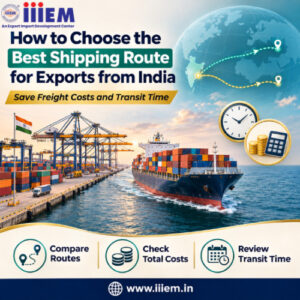
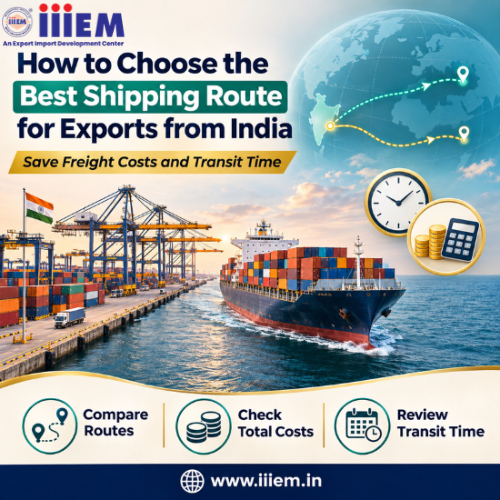
How can an Indian exporter select the most cost-effective maritime shipping route without depending entirely on a freight forwarder?
A freight forwarder may suggest a shipping route, but an exporter should understand whether that route offers the lowest overall cost, shortest transit time and minimum risk of delays.
The cheapest ocean freight quotation is not necessarily the most economical shipping option.
Let us understand how to choose the best sea freight route from India using two practical examples: Chennai to Dubai and Nhava Sheva to Thailand.
To understand the support a logistics partner can provide, read our guide to choosing a freight forwarder in India.
What Determines the Best Maritime Shipping Route?
Before selecting a shipping route, compare these important factors:
- Port of Loading (POL): Select an Indian port considering distance from the factory, inland transport costs and vessel connectivity.
- Port of Discharge (POD): Choose the destination port closest to the buyer or final delivery location.
- Direct Vessel or Transshipment: Direct services generally reduce handling and connection risks. Transshipment may offer better freight rates or sailing frequency.
- Transit Time: Compare total expected delivery time, not just the number of days the vessel spends at sea.
- Total Logistics Cost: Calculate inland freight, port handling, ocean freight, destination charges and applicable surcharges.
- Sailing Frequency: Weekly sailings may provide more flexibility than less frequent services.
- Reliability: Check historical vessel punctuality, port congestion, container availability and possible delays.
Example One: Exporting from Chennai to Dubai
Assume an Indian exporter is shipping one 20-foot container from Chennai to a buyer in Dubai.
Possible maritime route options:
- Route A: Chennai → Jebel Ali (Dubai): A direct vessel service, when available, generally offers fewer handling points and lower transshipment risk.
- Route B: Chennai → Colombo → Jebel Ali: A transshipment route via Sri Lanka, which may provide additional sailing options but involves connection time.
How should the exporter decide?
- Request quotations for both direct and transshipment services.
- Compare total freight charges, including transshipment-related charges where applicable.
- Check actual vessel departure, expected arrival and connection schedules.
- Confirm container availability and cargo cut-off dates.
- Choose the direct route if its time advantage justifies any additional freight cost.
Check available departures and routing options for your shipment date using Maersk’s shipping schedules.
Practical lesson: A direct Chennai–Jebel Ali service may be preferable for urgent cargo. A transshipment service can be economical for flexible deliveries if its total landed logistics cost is lower.https://www.maersk.com/schedules/?utm_source=chatgpt.com
Example Two: Exporting from Nhava Sheva to Thailand
Assume an exporter ships a 20-foot container from Jawaharlal Nehru Port (JNPT/Nhava Sheva) to Thailand.
Possible maritime route options:
- Route A: Nhava Sheva → Laem Chabang: A direct service, if available on the required sailing date.
- Route B: Nhava Sheva → Singapore → Laem Chabang: A transshipment service through Singapore.
- Route C: Nhava Sheva → Port Klang → Laem Chabang: A transshipment service through Malaysia.
How should the exporter decide?
- Identify whether the buyer’s destination is Bangkok, Laem Chabang or another Thai industrial location.
- Compare direct and transshipment schedules.
- Check connection waiting times at Singapore or Port Klang.
- Compare ocean freight and destination terminal charges.
- Include inland transportation from the Thai port to the buyer’s warehouse.
Practical lesson: The cheapest ocean route may become expensive if the destination port is far from the buyer or the container faces a lengthy transshipment delay.
How to Compare Shipping Routes before Booking
Ask your freight forwarder to provide at least three comparable quotations covering:
- Total freight cost and all applicable surcharges.
- Direct or transshipment service and the connecting port.
- Vessel departure date and estimated arrival date.
- Port-to-port and expected door-to-door transit time.
- Free detention and demurrage periods.
- Shipping line, sailing frequency and schedule reliability.
Before comparing quotations, understand how Incoterms affect export pricing and which transport costs fall under your responsibility.
Compare quotations on the same Incoterm, container size, cargo specifications and service scope.
How to Select the Most Cost-Effective Route
Use this simple approach:
Total Logistics Cost = Inland Transport + Origin Charges + Ocean Freight + Destination Charges + Applicable Surcharges
Include destination costs only when they fall under your contractual responsibility.
Select the route offering the best combination of cost, delivery time, reliability and cargo safety—not merely the lowest freight rate.
Conclusion
Choosing the best maritime shipping route is an important cost-saving skill for Indian exporters.
Exporters should compare direct and transshipment routes, transit times, total logistics costs and delivery reliability.
An informed exporter does not simply accept the cheapest quotation. The exporter selects the route that delivers the cargo economically, safely and on time.
Frequently Asked Questions (FAQs)
Q1. Is a direct shipping route always cheaper?
No. Direct shipping may save time, but transshipment routes can sometimes offer lower freight rates.
Q2. What is the difference between direct shipping and transshipment?
Direct shipping uses one vessel service without transferring the container to another vessel. Transshipment involves transferring cargo between vessels at an intermediate port.
Q3. Which port should I choose for exports to Dubai?
Jebel Ali is a major option for Dubai-bound container cargo. The best choice depends on the buyer’s delivery location and shipping arrangements.
Q4. Which is the best shipping route from Nhava Sheva to Thailand?
Compare available direct services with transshipment options via Singapore or Port Klang, considering the Thai destination port.
Q5. How can Indian SMEs reduce sea freight costs?
Compare multiple freight quotations, plan shipments early, avoid unnecessary transshipment, negotiate free-time terms and calculate total logistics costs before booking.