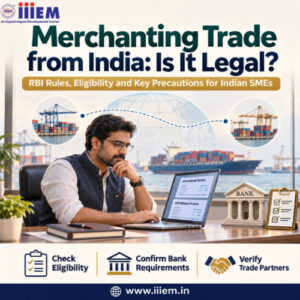
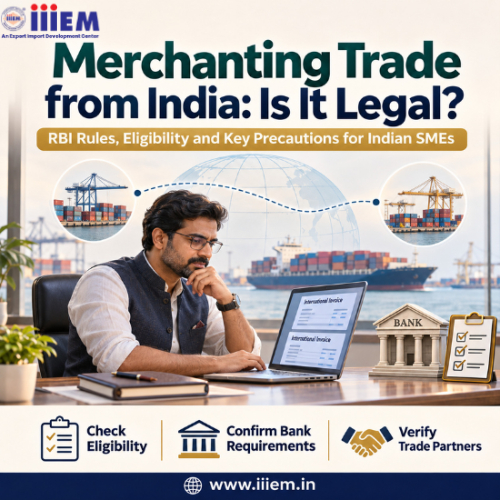
Can an Indian business buy goods from one foreign country and sell them to another without bringing the goods into India? Yes. This international business model is called Merchanting Trade, also known as a Merchanting Trade Transaction (MTT).
Merchanting trade offers Indian SMEs, startups and trading companies an opportunity to participate in global trade without physically importing or exporting goods through India. However, it involves strict Reserve Bank of India (RBI) regulations, banking requirements and financial risks.
Let us understand how merchanting trade works, its legality in India and the precautions every Indian trader should take.
What Is Merchanting Trade?
Merchanting trade is a transaction in which an Indian trader purchases goods from a supplier in one foreign country and sells them to a buyer in another country without the goods entering India’s Domestic Tariff Area.
Example:
- An Indian merchant purchases machinery from China for USD 20,000.
- The machinery is shipped directly from China to a buyer in Kenya.
- The Kenyan buyer pays the Indian merchant USD 24,000.
- The Indian merchant earns a gross trading margin of USD 4,000 before expenses.
The goods never physically enter India, but the Indian merchant manages the commercial transaction and payments.
Is Merchanting Trade Legal in India?
Yes. Merchanting trade is legal in India, subject to RBI guidelines under the Foreign Exchange Management Act (FEMA), 1999.
Important conditions include:
- RBI Compliance: Transactions must follow the RBI’s Merchanting Trade Transaction guidelines.
- Permitted Goods: Goods must be permitted for export and import under India’s prevailing Foreign Trade Policy.
- Banking Channel: Payments must be routed through an authorized dealer (AD Category-I) bank.
- Documentation: Purchase orders, sales contracts, invoices, transport documents and payment records must be maintained.
- Transaction Timeline: Merchanting trade must comply with RBI-prescribed completion and payment timelines.
For the applicable banking framework, refer to the RBI directions on export, import and merchanting trade transactions.
Can an Indian SME Undertake Merchanting Trade?
Yes. Indian MSMEs, merchant traders and established trading companies can undertake merchanting trade, provided they satisfy applicable regulatory and banking conditions.
Before starting, an Indian SME should consider:
- Business Registration: Operate through a legally recognized business entity.
- IEC: Obtain an Importer Exporter Code from DGFT, where applicable, and confirm requirements with the bank.
- AD Bank Approval: Confirm that the bank will handle the proposed merchanting trade transaction.
- Financial Capacity: Maintain sufficient working capital or acceptable banking arrangements.
- Trade Experience: Understand international contracts, shipping, foreign exchange and payment risks.
Merchanting trade is not restricted to large exporters, but banks may assess the trader’s financial strength and transaction history.
Important Considerations before Starting Merchanting Trade
- Verify Both Foreign Parties: Check the supplier’s and buyer’s legal identity, business registration, credibility and payment history.
- Check Product Eligibility: Verify India’s Foreign Trade Policy restrictions and destination-country import regulations before finalizing the product.
- Consult Your AD Bank First: Confirm transaction eligibility, payment arrangements, documentation and RBI compliance before signing contracts.
- Understand Payment Risks: Avoid paying suppliers without adequate buyer-payment security. Consider letters of credit, bank guarantees or other suitable safeguards.
Before committing funds, read our guide to handling international payment risks professionally.
- Check International Sanctions: Verify whether the countries, banks, products or parties are subject to applicable sanctions or trade restrictions.
- Plan Direct Shipment: Ensure shipping documents establish movement between the foreign supplier and overseas buyer without entry into India’s Domestic Tariff Area.
- Calculate Actual Profit: Include freight, insurance, bank charges, inspection expenses, currency fluctuations and applicable taxes.
- Review Contract Terms: Clearly specify product quality, delivery conditions, Incoterms, payment deadlines, dispute resolution and responsibility for damaged goods.
Compare the available payment terms in export and import before agreeing on when and how the buyer will pay.
- Understand Tax Implications: Consult a tax professional regarding GST, income tax and the accounting treatment of merchanting trade transactions.
- Maintain Proper Records: Preserve contracts, invoices, shipping documents, bank statements and supporting correspondence for regulatory verification.
Conclusion
Merchanting trade offers Indian SMEs an opportunity to expand into international markets without physically importing goods into India.
However, merchanting trade is not simply buying cheaply and selling at a higher price. It requires regulatory compliance, dependable foreign partners, secure payments and careful financial planning.
For beginners, the safest approach is to consult an experienced AD bank, verify both trading partners and understand RBI regulations before committing funds.
Frequently Asked Questions (FAQs)
Q1. Is merchanting trade allowed in India?
Yes. Merchanting trade is permitted under RBI regulations, subject to FEMA, Foreign Trade Policy and banking requirements.
Q2. Can a small Indian merchant exporter undertake merchanting trade?
Yes. An eligible Indian SME can undertake merchanting trade if its AD bank accepts the transaction and applicable conditions are fulfilled.
Q3. Do goods need to enter India during merchanting trade?
No. Goods move between foreign countries without entering India’s Domestic Tariff Area.
Q4. Is an IEC mandatory for merchanting trade?
IEC applicability should be verified with DGFT requirements and the handling AD bank before undertaking a transaction.
Q5. What is the biggest risk in merchanting trade?
Major risks include buyer non-payment, supplier default, foreign exchange fluctuations, documentation errors and non-compliance with RBI regulations.