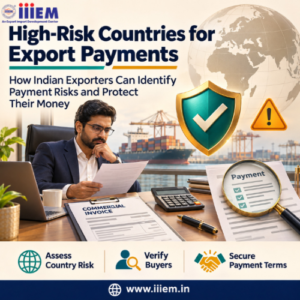
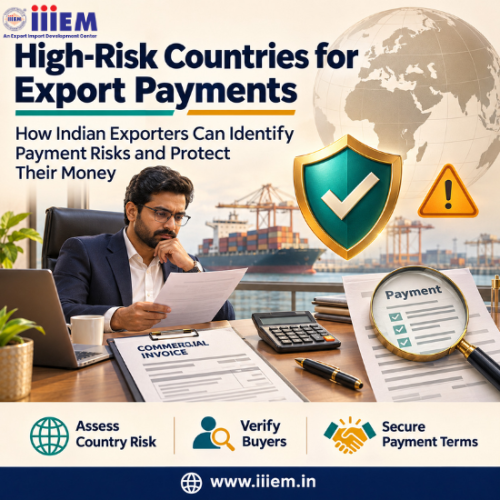
Exporting to a new country can open exciting business opportunities for Indian exporters. However, receiving payment from an overseas buyer is not always guaranteed. Political instability, economic crises, international sanctions, foreign exchange restrictions and banking difficulties can delay or even prevent export payments.
For Indian exporters, particularly MSMEs, merchant exporters and first-time exporters, identifying high-risk countries before accepting an export order is extremely important.
But what are high-risk countries in terms of export payments? How can Indian exporters identify them? What precautions should they take to protect their money?
Let’s understand the key risks and practical measures to minimize payment defaults in international trade.
- Which Countries Are Considered High-Risk for Export Payments?
A country may be considered high-risk when its political, economic, financial or banking conditions make it difficult for exporters to receive payments on time.
The following categories deserve special attention:
1a. Countries facing international sanctions
- Countries subject to comprehensive or targeted international sanctions may have restrictions on banking transactions.
- Examples include Iran, North Korea and Russia, although the nature and extent of restrictions differ.
- Payments may be blocked, rejected or delayed due to sanctions imposed by the UN, US, EU or other jurisdictions.
- Indian exporters must check applicable sanctions before entering into a transaction.
1b. Countries facing political instability or conflict
- War, civil unrest, regime changes and political uncertainty can disrupt banking operations.
- Examples include Sudan, Yemen, Myanmar and countries experiencing active conflict or severe instability.
- Importers may face difficulties transferring foreign currency even when they are willing to pay.
1c. Countries facing economic crises and foreign exchange shortages
- Some countries experience shortages of foreign currency, making it difficult for importers to obtain US dollars or other convertible currencies.
- Examples include Pakistan and Lebanon, where economic and foreign exchange conditions warrant careful monitoring.
- Exporters may experience delayed remittances despite having completed shipments.
1d. Countries with foreign exchange controls
- Some governments restrict the availability or outward transfer of foreign currency.
- Importers may need special approvals to remit payments.
- Exporters should investigate local exchange-control regulations before offering credit terms.
Important: There is no single permanent list of high-risk countries for export payments. Country risk changes with political developments, economic conditions, banking restrictions and international sanctions. A country facing economic difficulties is not automatically a prohibited export destination.
- International Sources to Identify High-Risk Countries
Indian exporters should regularly monitor the following official sources before accepting export orders.
2a. FATF (Financial Action Task Force): Publishes two important lists:
- Black List – High-Risk Jurisdictions Subject to a Call for Action.
- Grey List – Jurisdictions under Increased Monitoring.
FATF High-Risk Jurisdictions — 30 October 2026
As per the FATF update dated 30 October 2026:
- Black List: North Korea (DPRK), Iran and Myanmar.
- Grey List: Countries include Lebanon, Nepal, Iraq, Syria, Yemen, Venezuela, Kenya, Kuwait and Vietnam, among others.
Being on the grey list does not automatically mean that trade payments are prohibited. It indicates that exporters and financial institutions should consider the relevant risks.
2b. OFAC (Office of Foreign Assets Control), USA: Check US sanctions programmes and restrictions, particularly where the transaction involves US dollars, US banks or US-linked parties.
- United Nations Security Council: Check applicable international sanctions against countries, organisations and individuals.
- ECGC (Export Credit Guarantee Corporation of India): Check country risk classifications and available export credit insurance facilities.
- RBI (Reserve Bank of India): Consult your Authorised Dealer (AD) bank regarding foreign exchange regulations and permissible payment channels.
- What Precautions Should Indian Exporters Take to Minimize Payment Risks?
The following precautions can help Indian exporters reduce the possibility of delayed payments and bad debts.
3a. Conduct Buyer Verification
- Verify the overseas buyer’s business registration, address, website and ownership.
- Obtain trade references and bank details.
- Check the buyer’s financial credibility and payment history.
- Avoid dealing with unknown buyers solely on the basis of email or WhatsApp communication.
3b. Avoid Open Account Payment Terms (Documents against Payment – DA)
3c. Prefer Advance Payment
- Request 100% advance payment wherever commercially possible.
- Alternatively, negotiate a substantial advance with the balance payable before shipment or against shipping documents.
- Ensure that the payment is received through authorised banking channels.
Before agreeing to credit, compare the available payment terms in export and import.
3d. Use an Irrevocable Letter of Credit (LC)
- Consider an irrevocable LC issued by a reputable international bank.
- Wherever possible, request confirmation by a reliable bank acceptable to your Indian AD bank.
- Carefully examine the LC conditions, expiry date, presentation requirements and payment terms.
- Remember that an LC does not eliminate risks arising from sanctions, fraud or discrepancies in documents.
For a broader approach to payment security, read our guide on handling export payment risks professionally.
3e. Check the Buyer’s Bank
- Verify the overseas bank’s reputation and international banking relationships.
- Confirm that the bank can remit payment to India.
- Ask your AD bank whether the proposed payment route and intermediary banks are acceptable.
- Do not rely only on the buyer’s assurance that payment has been arranged.
3f. Obtain ECGC Credit Insurance
- Explore ECGC policies covering commercial and political risks.
- Depending on the policy, protection may include buyer insolvency, protracted default, war, transfer restrictions and other specified political risks.
- Check country eligibility, buyer limits, exclusions and policy conditions before shipment.
3g. Verify Sanctions and Compliance for the buyer’s country
- Screen the buyer, beneficial owners, banks, intermediaries, vessels and other relevant parties against applicable sanctions lists.
- Do not assume that a transaction is permissible merely because the buyer is based in a country with which India has trade relations.
- Obtain professional compliance advice whenever sanctions concerns arise.
3h. Do Not Accept Unusual Payment Arrangements
- Avoid payments from unrelated third-party companies or individuals without proper verification.
- Do not agree to receive payments through personal accounts, unofficial agents or unregulated channels.
- Ensure that the remitter, buyer and commercial transaction have a clear and documented connection.
Accurate records also matter. Learn how export documentation mistakes can affect buyer payments.
Conclusion
Exporting to high-risk countries does not necessarily mean avoiding business opportunities. It means understanding the risks before committing money, goods and credit.
For Indian exporters, particularly new exporters and MSMEs, payment security should be as important as finding an overseas buyer.
Always remember: A confirmed export order is not a successful export transaction until the payment is realized and repatriated to India.
Frequently Asked Questions (FAQs)
Q1. Which countries are considered high-risk for Indian exporters in terms of payments?
Countries facing international sanctions, political instability, foreign exchange shortages and banking restrictions may pose higher payment risks. Indian exporters should regularly check FATF lists, international sanctions and ECGC country risk classifications.
Q2. Is it safe to export goods to countries on the FATF Grey List?
Not necessarily unsafe. FATF Grey List countries are under increased monitoring for deficiencies in anti-money laundering and counter-terrorist financing systems. Exporters should conduct enhanced buyer and banking checks rather than automatically rejecting all buyers from these countries.
Q3. Which is the safest payment method for exporting to high-risk countries?
Advance payment is generally the safest option for exporters. An irrevocable, suitably confirmed Letter of Credit from a reliable bank can also provide payment security, subject to its terms and compliance requirements.
Q4. Does ECGC cover non-payment by overseas buyers?
ECGC offers export credit insurance against specified commercial and political risks. However, coverage depends on the policy, buyer and country eligibility, approved limits, exclusions and compliance with policy conditions.
Q5. What should an Indian exporter do if an overseas buyer fails to make payment?
The exporter should immediately contact the buyer, maintain documentary evidence, inform the Authorised Dealer bank, examine ECGC claim eligibility if insured, and seek professional legal advice where necessary. The exporter must also comply with RBI’s export payment realization and repatriation requirements.