Beyond Rice & Spices – India’s Hidden Products for Exports
When global buyers think of Indian exports, IT services, pharmaceuticals, textiles, and spices usually dominate the conversation. Yet beneath India’s $440+ billion merchandise export ledger lies a fascinating catalog of unconventional, high-demand goods. From sacred temple offerings turned into luxury salon extensions to heavy-duty metro coaches powering foreign transit systems, India’s export basket reflects an extraordinary blend of cultural heritage, circular sustainability, and industrial engineering.
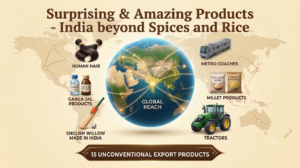
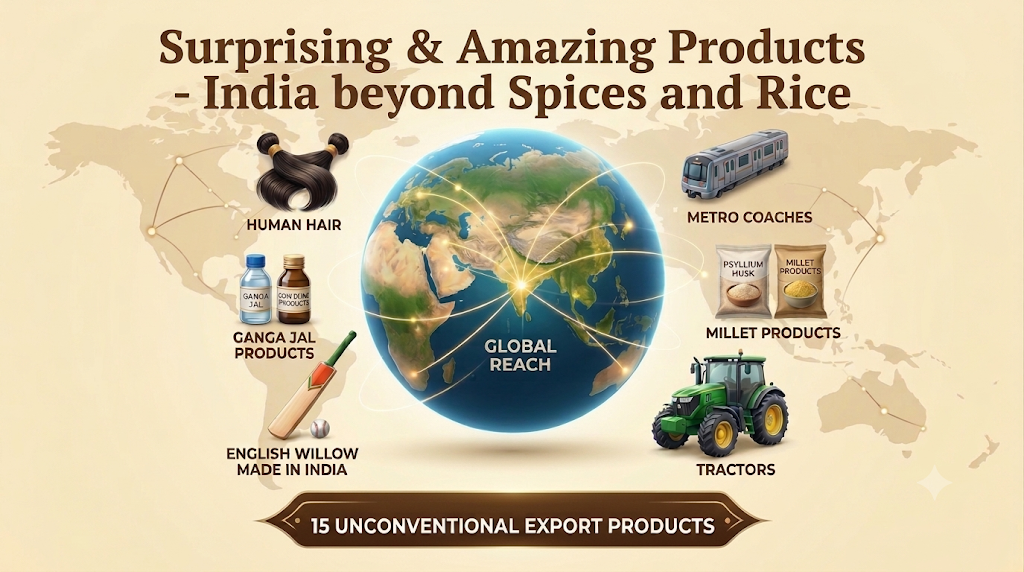
India’s lesser-known exports span 15 distinct categories across circular bio-products, cultural goods, agricultural specialties, and heavy engineering—including human hair, psyllium husk, English willow cricket bats, metro train coaches, and tractors. Driven by global shifts toward organic wellness, sustainable materials, and cost-effective manufacturing, these niche commodities supply major markets across the United States, Europe, the Middle East, and Africa.
How Does India Turn Cultural Traditions into Global Exports?
Several of India’s most unexpected export successes originate directly from religious rituals, rural livelihoods, and indigenous biodiversity, proving that local traditions can scale into multi-million-dollar international supply chains.
-
Human Hair (Temple Offerings): Devotees at temples such as Tirupati offer their hair as a gesture of devotion. Indian processors sort, clean, and export this ethically sourced hair to China, Italy, Myanmar, and the USA, where it is transformed into high-end wigs and hair extensions—generating nearly $950 million in annual export value.
-
Recycled Temple Flowers & Cow Dung Products: In a model of “waste-to-wealth” sustainability, discarded temple flowers and rural cow dung or urine are repurposed into chemical-free incense, organic fertilizers, natural dyes, and herbal soaps. Eco-conscious consumers in the USA, UK, France, and the UAE actively import these biodegradable alternatives.
-
Ganga Jal (Bottled Holy Water): Packaged water from the Ganges River is exported to the USA, UK, Canada, and the UAE to meet spiritual and ceremonial demand among the global Indian diaspora.
-
Hill Grass Broomsticks: Handcrafted from natural hill grass harvested in Meghalaya and Nagaland, these durable brooms are marketed as plastic-free, sustainable household tools in eco-stores across the USA, Australia, and Canada.
Which Agricultural and Wellness Goods Does India Dominate Globally?
India’s agricultural sector exports far more than basmati rice and tea. Leveraging indigenous crop varieties and Ayurvedic knowledge, Indian exporters lead several global health and food categories.
-
Psyllium Husk (Isabgol): India supplies roughly 80% of the world’s psyllium husk—primarily cultivated in Gujarat—serving pharmaceutical and dietary fiber markets in the USA, Germany, Japan, and France.
-
Ashwagandha & Ayurvedic Personal Care: Known globally as “Indian Ginseng,” Ashwagandha has become a top-selling adaptogen in Western supplement markets (USA, UK, Germany, Japan), alongside Ayurvedic toothpastes and herbal cosmetics.
-
A2 Dairy from Indicine Cattle: Milk and ghee derived from native Zebu cattle breeds like Gir and Sahiwal are prized in Singapore, the UAE, Malaysia, and the USA for their A2 beta-casein protein profile.
-
Transitional & Gluten-Free Health Foods: Indian food manufacturers produce certified organic vegan snacks, quinoa blends, and millet pasta for health-focused retail shelves in North America, Europe, and the Gulf.
-
Buffalo Meat (Carabeef): Despite domestic cultural sensitivities, India ranks among the world’s largest exporters of halal-certified buffalo meat, shipping primarily to Vietnam, Malaysia, Egypt, and Saudi Arabia.
What Surprising Manufactured & Engineering Goods Does India Export?
Beyond raw commodities, Indian factories craft specialized sporting goods, everyday essentials, and heavy machinery that compete globally on precision and value.
-
Tractors: Led by domestic giants like Mahindra and TAFE, India is the world’s largest exporter of tractors, powering farms across the USA, Mexico, Turkey, Thailand, and Africa.
-
Metro Train Coaches: Once reliant on imported rolling stock, India now manufactures and exports complete metro train sets via BEML and Titagarh Wagons to Australia, Bangladesh, Sri Lanka, and Mozambique.
-
English Willow Cricket Bats: Skilled artisans in India craft professional-grade cricket bats from English willow, exporting them back to traditional cricketing powerhouses including the UK, Australia, and South Africa.
-
Safety Matchsticks: Small wooden safety matches produced in Tamil Nadu and Kerala remain an indispensable daily export across Kenya, Sudan, Madagascar, and Yemen.
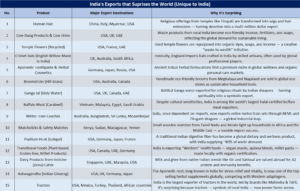
Quick Reference: India’s 15 Surprising Exports
Frequently Asked Questions (FAQs)
What is the most surprising multi-million-dollar export from India? Human hair sourced from religious temple tonsuring—such as at Tirupati—is one of India’s most unexpected major exports, generating hundreds of millions of dollars annually from buyers in the USA, China, and Italy.
Which global agricultural export does India hold a near-monopoly on? India controls approximately 80% of the global supply of psyllium husk (Isabgol), a natural dietary fiber heavily imported by pharmaceutical and wellness brands in the US and Europe.
Does India export heavy engineering and transit equipment? Yes. India is the world’s largest exporter of tractors and exports complete, modern metro train coaches to countries including Australia, Bangladesh, and Sri Lanka.