Introduction
In international trade, an invoice is much more than a document showing the price of goods. It is an important document used by Customs authorities, banks, tax departments and other government agencies to verify cross-border transactions.
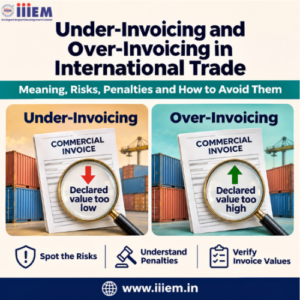
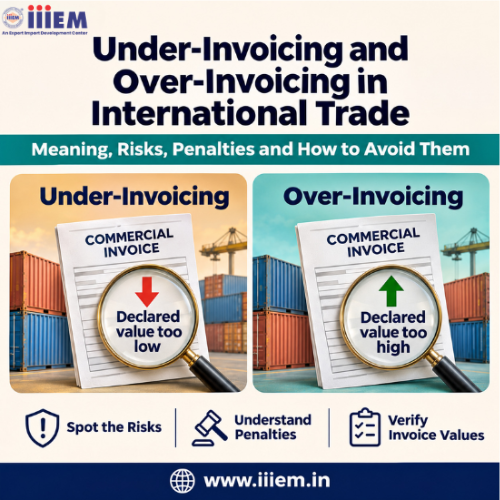
However, some exporters and importers deliberately declare a value that is lower or higher than the actual transaction value. This practice is known as under-invoicing and over-invoicing.
Why do businesses do this? Some want to reduce customs duty, avoid taxes, transfer money illegally or claim higher export benefits. Although it may appear financially attractive in the short term, incorrect invoicing can lead to serious legal and financial consequences.
Let’s understand what under-invoicing and over-invoicing mean, why businesses practice them and why every new exporter and importer should avoid them.
- What is Under-Invoicing in International Trade?
Under-invoicing means declaring a value on the commercial invoice that is deliberately lower than the actual price paid or payable for the goods.
Example:
An Indian importer purchases machinery from China for USD 20,000. However, the supplier and importer agree to show only USD 12,000 on the commercial invoice.
The importer pays customs duty on the declared value, while the balance USD 8,000 may be paid through another channel.
Why is under-invoicing done?
- To reduce customs duty and import-related taxes.
- To reduce the declared value of imported goods.
- To transfer the balance payment through unofficial channels.
- To hide the actual value of international transactions.
- What is Over-Invoicing in International Trade?
Over-invoicing means deliberately declaring a higher value in the commercial invoice than the actual transaction value.
Example:
An Indian importer purchases electronic components from a supplier in China for USD 10,000. However, the supplier issues an invoice for USD 18,000.
The importer transfers the higher amount through banking channels, potentially using the additional payment to move money abroad.
Why is over-invoicing done?
- To transfer excess money to overseas accounts.
- To move funds outside India through international trade transactions.
- To create false expenses or manipulate financial records.
- To misuse export incentives or other financial benefits in certain transactions.
- Under-Invoicing vs Over-Invoicing: What is the Difference?
| Particulars | Under-Invoicing | Over-Invoicing |
| Meaning | Declaring a lower value than the actual transaction value | Declaring a higher value than the actual transaction value |
| Invoice value | Less than actual value | More than actual value |
| Common objective | Reduce customs duty or conceal part of the payment | Transfer excess funds or manipulate financial records |
| Example | Actual value USD 20,000; invoice USD 12,000 | Actual value USD 10,000; invoice USD 18,000 |
| Major risk | Customs duty evasion and foreign exchange violations | Unauthorized foreign exchange transfers and financial manipulation |
- Why Should Exporters and Importers Avoid Under-Invoicing and Over-Invoicing?
Incorrect invoicing can create problems with Customs, banks, tax authorities and foreign exchange regulators.
Here are some important risks:
- Customs Penalties: Customs authorities can question declared values, investigate transactions and impose penalties where misdeclaration is established.
- Foreign Exchange Violations: Incorrect declaration of export or import values can attract scrutiny under FEMA (Foreign Exchange Management Act), 1999, and applicable RBI regulations.
- Loss of Export Benefits: Incorrect declarations can lead to investigations, recovery of wrongly claimed export incentives and other consequences.
- Banking and Payment Difficulties: Banks may question transactions where invoice values do not match payment records or supporting documents.
- Legal Action: Deliberately submitting false invoices or declarations can result in penalties and, depending on the offence, prosecution under applicable laws.
- Loss of Business Reputation: Overseas buyers, suppliers, banks and financial institutions may lose confidence in businesses involved in suspicious transactions.
- What Laws Govern Incorrect Invoicing in India?
Indian exporters and importers must understand the following important legal frameworks:
- Customs Act, 1962: Section 14 deals with the valuation of imported and exported goods. False or incorrect declarations can attract action under applicable provisions, including Section 114AA.
- Customs Valuation Rules: The Customs Valuation Rules provide the basis for determining the value of imported and exported goods.
- FEMA, 1999: Regulates foreign exchange transactions, including export proceeds and import payments.
- RBI Regulations: The Foreign Exchange Management (Export and Import of Goods and Services) Regulations, 2026, effective from 1 October 2026, govern relevant export and import transactions along with applicable RBI directions.
Remember, Customs authorities are not required to accept an invoice value blindly. They can examine supporting documents and question a declared value when there are reasonable grounds to doubt its accuracy.
For India’s rules on determining the customs value of imported and exported goods, refer to the Customs Valuation Rules, 2007.
- How Can Exporters and Importers Avoid Incorrect Invoicing?
Follow these simple practices to maintain transparency in international trade:
- Declare the genuine transaction value: Ensure that your commercial invoice reflects the actual price paid or payable, subject to applicable valuation rules and adjustments.
- Maintain proper documentation: Keep purchase orders, sales contracts, commercial invoices, payment records and other supporting documents.
- Use authorised banking channels: Make and receive international payments through permitted banking channels.
- Avoid unofficial payment arrangements: Never agree to show one value on the invoice and settle a different amount through an undisclosed channel.
- Understand Customs valuation: Learn which costs and charges must be included in the customs value of imported or exported goods.
- Consult professionals: Seek advice from your Customs Broker, Chartered Accountant or authorized dealer bank whenever there is uncertainty about valuation or payment arrangements.
For practical checks before shipment, see iiiEM’s guide to avoiding under-invoicing and over-invoicing.
Conclusion
International trade is built on trust, transparency and compliance. Under-invoicing and over-invoicing may appear to offer short-term financial advantages, but they can expose exporters and importers to customs investigations, financial penalties, foreign exchange violations and reputational damage.
For every new exporter or importer in India, the safest approach is simple: declare the correct transaction value, maintain genuine documents and follow the applicable Customs, FEMA and RBI regulations.
Remember, a successful international trade business is not built by manipulating invoice values. It is built by conducting business honestly and professionally.